Roll Six Balls to Set Putting Green Speed: Player and Staff Actions

Putting green speed is the distance, in feet, a golf ball rolls on a level surface after being released with a Stimpmeter, the USGA’s standardized testing device. Most everyday courses run in a range generally between about 9 and 10.5 feet, and that range is where many golfers report the best experience. If you want a quick baseline, roll six balls (three each direction) on a flat patch and average the results. That number tells you how much to shorten or lengthen your stroke before you ever step onto the first tee.
TL;DR:
- Maintaining a consistent mowing height between 0.125 and 0.156 inches reduces speed fluctuations and avoids turf stress and disease.
- Golfers should shorten their stroke on greens faster than 10 feet and play with adjusted firmness based on the measured Stimpmeter speed.
- Environmental factors like dew, rain, and wind can cause daily green speed variability, making regular testing at consistent times essential.
- Most courses aim for a green speed between 9.5 and 10.5 feet, with higher speeds requiring more precise maintenance and shorter, controlled strokes.
- Installing engineered bases and well-drained surfaces can ensure consistent ball roll and reduce the influence of weather and turf conditions.
Table of Contents
- What a Stimpmeter Measures and How to Test It Correctly
- Typical Speed Ranges and What They Mean on the Course
- What Actually Changes Green Speed, and By How Much
- How Green Speed Changes the Way You Should Putt
- Setting and Holding a Target Speed: Maintenance Practices That Work
- Why Speed Changes Throughout the Day
- Picking the Right Target Speed for Your Course or Backyard Green
- A Publisher’s Perspective on Installation and Speed Consistency
- Get a Consistent Putting Surface Without the Guesswork
- Sources
- FAQ
What a Stimpmeter Measures and How to Test It Correctly
A Stimpmeter is a simple aluminum ramp about three feet long, with a notched groove that releases a golf ball at a fixed angle and speed every time. Because the release mechanics never change, the only variable is the surface itself, which is why the USGA adopted it decades ago as the standard for comparing greens across courses and seasons.
Getting a usable reading takes a specific sequence:
- Find a flat section of the green, at least 10 feet in diameter, with no visible slope.
- Set the ramp and roll three balls in one direction, marking where each stops.
- Turn 180 degrees and roll three more balls back through roughly the same spot.
- Measure all six distances in feet, then average them for your Stimpmeter reading.
Skipping the flat-area check is the most common mistake. Wind, even a light breeze, and grain direction can also skew individual rolls, which is exactly why the protocol calls for six rolls instead of one or two.
Typical Speed Ranges and What They Mean on the Course
A single Stimpmeter number tells you almost everything about how a green will play before you strike a putt. Slower surfaces forgive a mis-hit; faster ones punish it.
| Speed Range | Typical Setting | Playing Character |
|---|---|---|
| 6–8 ft | Municipal, budget daily-fee courses | Forgiving, requires firmer strokes |
| 9–10.5 ft | Most private clubs and better daily-fee courses | Balanced, matches golfer preference |
| 11–12 ft | Upscale private clubs, PGA Tour events | Fast, demands shorter, controlled strokes |
| — | Major championships (Masters, U.S. Open) | Extreme, minimal margin for error |
PGA Tour events commonly run near Stimp 12, a speed most instructors consider fast enough to require a visibly shorter backstroke. Consistency across all 18 holes matters more to golfer satisfaction than chasing a record-setting top number. A course running a uniform 9.5 feet everywhere will earn better reviews than one that swings between 8 and 11 depending on the hole.
What Actually Changes Green Speed, and By How Much
Mowing height gets the credit, but it is only one lever among several, and not always the biggest one. Penn State Extension identifies smoothness and firmness as the primary components of speed, with mowing height, rolling frequency, grain, fertility, and thatch all playing supporting roles.
- Mowing height and mower sharpness (dull bedknives drag and slow the roll)
- Rolling frequency, which can raise speed without cutting turf shorter
- Surface firmness and moisture, including morning dew
- Grass species (bentgrass rolls differently than Bermuda)
- Grain direction, which speeds up or slows putts depending on stroke line
- Topdressing timing and sand particle size
Here’s the part most greenkeepers learn the hard way: cutting height below about 0.125 inches produces diminishing returns. Below that threshold, MSU research found speed gains shrink while turf stress and disease risk climb fast. Alternating mowing days with lightweight rolling often gets you the same speed with far less strain on the plant.
Pro Tip: Listen for the sound at impact. A crisp, higher-pitched click usually signals a firmer, faster surface, while a duller thud means more moisture and a slower roll, even before you check a Stimpmeter.
How Green Speed Changes the Way You Should Putt
Speed dictates stroke length more than any other single variable. On a green running 11 or 12, a stroke sized for a 9-footer will blow the putt 4 to 6 feet past. Practical putting guidance confirms the fix isn’t a different tempo, it’s a shorter backswing paired with the same rhythm you’d use on any putt.
- Shorten your stroke on fast greens; lengthen it on slow ones, but keep tempo constant
- Read more break on faster greens since the ball has more time to react to slope
- Play uphill putts firmer and downhill putts with a softer touch, adjusting for the day’s speed
- Roll a practice putt on the first green before your round to recalibrate instantly
Pro Tip: Hit one practice putt from 15 feet on the practice green closest to the first tee. If it runs past the hole by more than two feet, the greens are faster than you expect, and every read for the next hour should account for that.
Setting and Holding a Target Speed: Maintenance Practices That Work
Superintendents who hit a consistent number week after week aren’t guessing. They’re running a repeatable maintenance recipe and checking it against real data.
- Set a mowing height window (often 0.125 to 0.156 inches for bentgrass greens) and stick to it rather than chasing daily speed swings.
- Alternate mowing with lightweight rolling on off-days to add speed without added turf stress.
- Time topdressing for low-play windows so sand settles before the next round.
- Irrigate the night before rounds, not the morning of, to avoid soft, slow surfaces at tee time.
- Keep bedknives and rollers sharpened and calibrated. MSU trials found mower condition alone can shift speed by a measurable margin, independent of cutting height.
A monitoring log turns guesswork into a pattern. Track the location on the green, time of day, weather, and all six roll distances every time you test. Golfers were most satisfied when greens measured between 9.5 and 10.5 feet, and that same research showed morning and afternoon readings on the same green routinely differed enough to matter for setup decisions.
Why Speed Changes Throughout the Day
A single Stimpmeter reading is a snapshot, not a fact about the green forever. Morning dew and cooler temperatures typically produce slower readings than afternoon sun on the same surface, and rain or high humidity can shave a full foot or more off your number within hours.
- Test at a consistent time, ideally 7 a.m. and again before afternoon tee times
- Use the same flat spot on the same green every time for comparable data
- Log weather conditions alongside your six roll distances
- Treat a one-day spike or dip as noise; trust patterns across a week instead
Picking the Right Target Speed for Your Course or Backyard Green
Public courses generally serve golfers best at 8 to 9.5 feet, where speed stays playable for a wide range of skill levels. Private clubs often push toward 9.5 to 11 feet to match member expectations, while tournament setups climb higher for a short, controlled window.
- Public/daily-fee: prioritize consistency over top speed to keep pace of play reasonable
- Private clubs: match member skill level, not tour broadcasts
- Tournament setups: firm and fast, but only for the event window
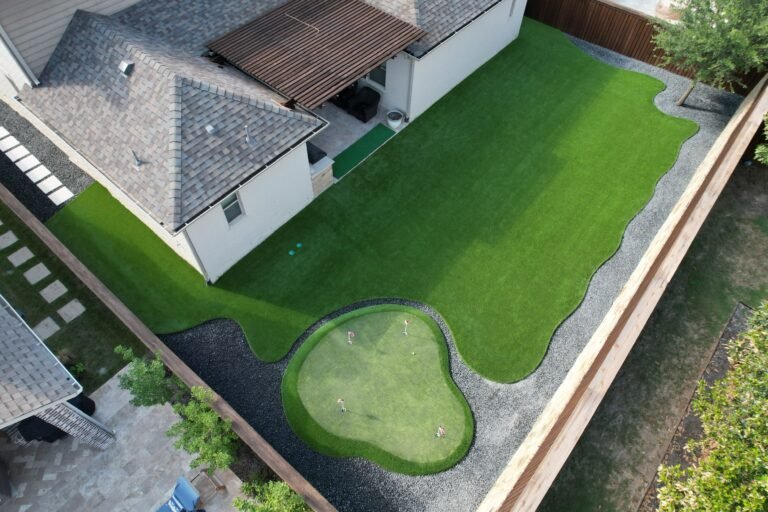
- Backyard and artificial greens: consistency is easier to control since there’s no grain, thatch, or weather-driven moisture swing to manage
A well-built artificial putting surface can be designed around a specific target speed from day one, which is something natural turf rarely offers without years of tuning.
A Publisher’s Perspective on Installation and Speed Consistency
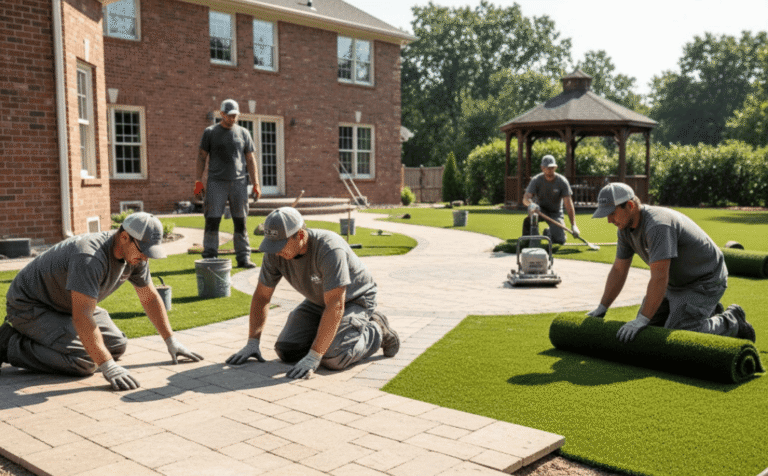
Most of the speed inconsistency golfers complain about isn’t really about grass type. It’s about what’s underneath it. A base that isn’t compacted evenly, or drainage that pools water on one side of a green, will create speed variation no amount of mowing can fix. Turf selection and infill density do more to determine ball roll than most homeowners realize, and a properly smoothed, well-drained base holds its speed through rain, heat, and heavy use in a way natural bentgrass rarely can without constant attention.
— Everson
Get a Consistent Putting Surface Without the Guesswork
Chasing the right green speed on natural turf means fighting weather, mowing schedules, and grain every single week. Putting green installations with engineered bases and speed-consistent turf systems can hold their roll consistently in hot climates without irrigation timing, topdressing, or a mower calibration schedule to manage.

Whether planning a full backyard practice green or a single putting cup off the patio, the base, drainage, and surface can be built to match the desired putting speed. If you’re ready to see what that looks like on your property, request a site consult for a custom putting green and we’ll walk you through layout, speed options, and a project estimate.
Sources
- Stimpmeter explained: what is a Stimpmeter and how does it work?
- Factors affecting green speed — Penn State Extension
- The truth about green speeds — USGA
FAQ
What does a 10.5 green speed mean?
A 10.5 Stimpmeter reading means a ball rolled from the device travels 10.5 feet on average, placing that green right at the upper end of the range most golfers report as their favorite.
Is a green speed of 12 considered fast?
Yes. A speed of 12 is generally regarded as fast, matching typical PGA Tour event conditions and requiring most golfers to noticeably shorten their stroke length.
How fast were greens in the 1970s?
Reliable historical Stimpmeter data from that era is limited, but greens were widely understood to run significantly slower than today’s courses, often in the 6 to 7 foot range, due to less refined mowing equipment and turf varieties.
What club speed do I need to drive a golf ball 300 yards?
Driving distance depends on clubhead speed, launch angle, and ball type rather than green speed, and generally requires a sufficiently high clubhead speed with modern equipment; this is unrelated to putting surface speed.
How often should I test my green speed?
Test at a consistent time, such as 7 a.m. and again before afternoon play, since morning and afternoon readings on the same green often differ enough to affect setup decisions.