
Muddy Backyard Fix: Practical Solutions for DFW Homes

What actually works for a muddy backyard fix in Dallas-Fort Worth
The most effective muddy backyard fix combines three things: proper drainage installation, soil amendment for Texas clay, and a surface solution like artificial turf or pavers. Do just one of these and you will likely move the mud around rather than eliminate it.
Here are the core solutions that work in DFW:
- French drains or dry wells to redirect surface water away from problem zones
- Regrading low spots so water flows away from your home
- Expanded shale worked into clay soil to create permanent drainage pores (commonly recommended at around 25–30% volume ratio)
- Core aeration with plugs pulled about two to three inches deep, followed by compost topdressing
- Artificial turf or pavers to cap high-traffic areas that never seem to dry out
- Downspout extensions redirected several feet from your foundation
Pro Tip: Before spending a dollar on any fix, walk your yard within 30 minutes of a moderate rain. Note exactly where water pools and trace it back to its source. A misdirected downspout or broken irrigation head often causes mud that looks like a drainage problem.
Table of Contents
- Why Dallas-Fort Worth backyards stay muddy after every rain
- How to fix a soggy yard: drainage, soil, and surface solutions
- Top local contractors for drainage and landscaping in DFW
- How to choose the right contractor or fix for your yard
- Why artificial turf and pavers solve mud problems that grass cannot
- What does fixing a muddy yard actually cost?
- Recommended local providers for landscaping and drainage in DFW
- How to prevent backyard mud from coming back
- Pave-n-turf turns your muddy yard into a clean, usable space
- Key Takeaways
- FAQ
Why Dallas-Fort Worth backyards stay muddy after every rain
North Texas clay soil, often called black gumbo, is the root cause for most DFW homeowners. Clay infiltration rates run as low as 0.1–0.2 inches per hour, which means even a moderate spring storm overwhelms the soil’s ability to absorb water. The result is standing water that lingers for days.
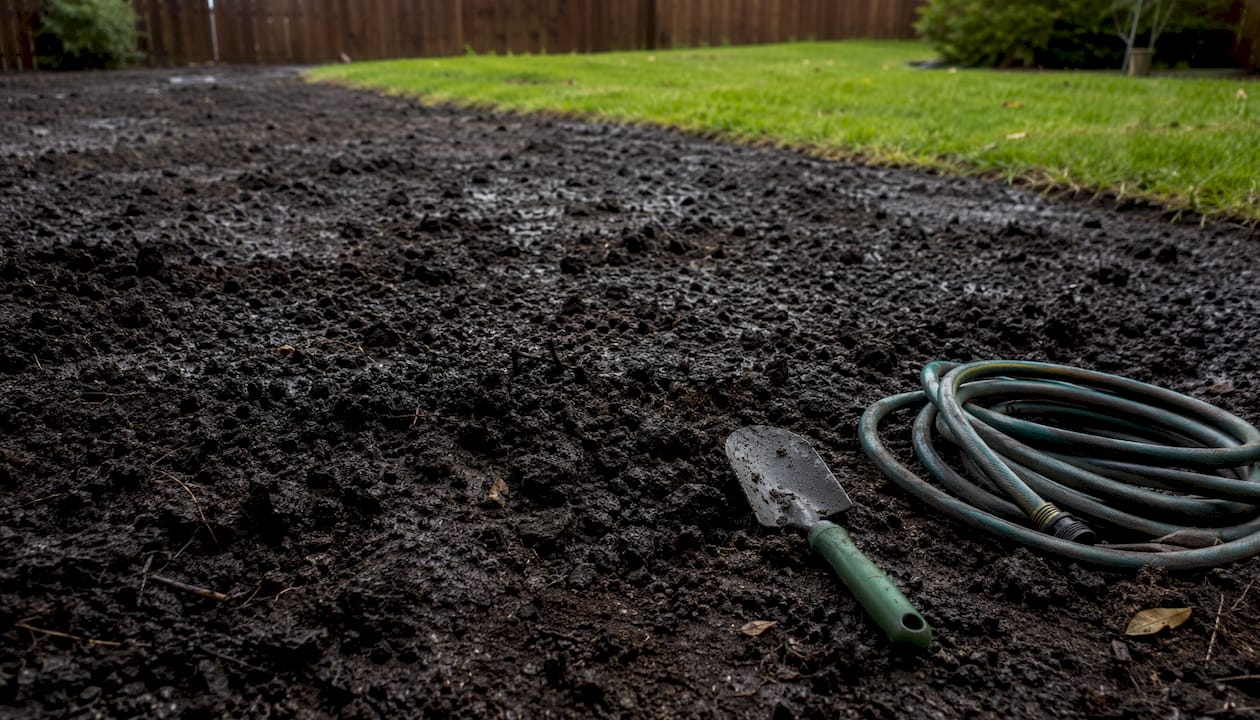
Poor surface grading makes things worse. A yard that is flat or slightly lower in the middle collects runoff from every direction. Misdirected downspouts and irrigation systems running too long add even more water volume to soil that is already saturated.
Texas clay also goes through seasonal shrink-swell cycles. It cracks and pulls away from structures in summer, then swells and heaves in wet seasons, which can shift your grading and drainage infrastructure over time. Seasonal soil movement means a fix that worked last spring may need attention by fall.
Clay soil in Dallas does not just hold water. It actively resists letting it go. Until you change the soil structure or give water a direct path out, surface fixes will only delay the problem.
How to fix a soggy yard: drainage, soil, and surface solutions
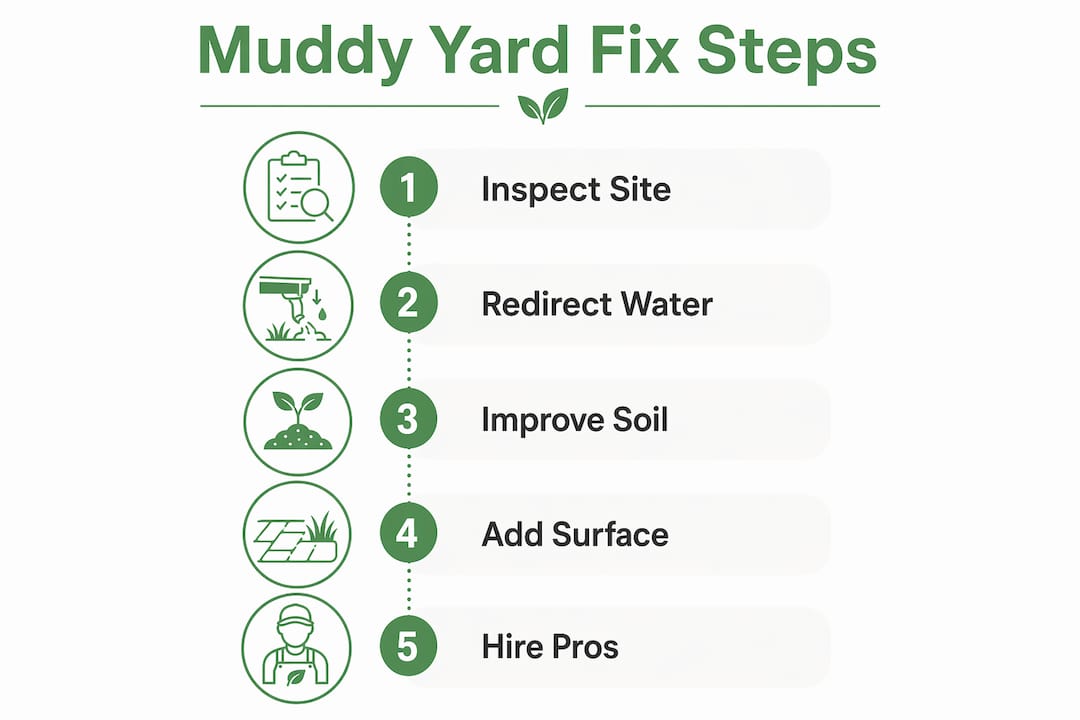
Fixing a muddy lawn repair job in DFW works best when you sequence the steps correctly. Start with water sources, then drainage structure, then soil, then surface.
- Redirect downspouts and irrigation. Misdirected downspouts are one of the most common causes of localized mud. Extend them at least 6 feet from your foundation and angle them toward a permeable area.
- Regrade low spots. Add topsoil to raise low areas and slope the grade at roughly 1/4 inch per foot away from your house.
- Install a French drain. Dig a trench at least 12 inches deep, slope it 1 inch per 10 feet toward a street curb or drainage easement, and fill it with crushed stone around a perforated pipe. French drains in heavy clay must discharge to a positive outlet, not rely on percolation alone.
- Amend the soil. Skip the sand. Adding sand to clay at typical ratios creates a near-concrete mix. Use expanded shale instead, mixed at a significant volume into the top several inches of soil as a permanent structural amendment.
- Core aerate. Use a core aerator that pulls 2.5–3 inch plugs, then topdress immediately with finished compost. Spike aerators compact clay further, so avoid them.
- Cover the surface. For high-traffic zones, install artificial turf, pavers, or gravel over landscape fabric to create durable, mud-free surfaces. For wet areas you want to keep green, plant water-tolerant ground covers.
| Solution | Best for | Typical timeline |
|---|---|---|
| Downspout redirect | Localized mud near foundation | 1 day |
| Regrading | Flat or low-center yards | 1–3 days |
| French drain | Chronic standing water | 1–2 weeks to install |
| Expanded shale amendment | Heavy clay soil structure | 1–2 seasons for full effect |
| Core aeration + compost | Compacted turf areas | 2–3 seasons |
| Artificial turf or pavers | High-traffic, pet, or play zones | 1–5 days to install |
Top local contractors for drainage and landscaping in DFW
Choosing the right contractor matters as much as choosing the right fix. Here is how the main DFW providers stack up across key criteria.
| Provider | Specialization | Ratings/Certifications | Coverage |
|---|---|---|---|
| MDM Landscapes | Landscaping, hardscape, irrigation | BBB Business Review Seal | Fort Worth and Dallas |
| Pave-n-turf | Artificial turf, pavers, decorative rock | High Google and Yelp ratings | DFW and Austin |
| Complete Landsculpture | Full-service design/build, pool, drainage | BBB, TNLA, NALP, multiple industry associations | North Texas and Oklahoma |
| Texas Oasis Landscape & Drainage | French drains, dry wells, permeable hardscape | Licensed, insured | Dallas area |
| DFW Landscaping & Lawn Care | Backyard transformations, drainage, irrigation | Licensed Irrigator | Fort Worth and DFW |
| Black Hill Landscaping | Precision lawn care, drainage, sprinklers | 20-point completion protocol | Fort Worth |
| GroundScape Solutions | Outdoor living, hardscape, patios | Not publicly listed | DFW |
| North Dallas Landscapes | Lawn care, irrigation, hardscape | Free estimates | Dallas |
| Mudbug | Drainage solutions | Not publicly listed | DFW |
Key things to look for when comparing providers:
- Licensed and insured status, verified before signing anything
- BBB Business Review Seal as a baseline trust signal
- Experience with Dallas clay soil specifically, not just general drainage work
- Customer ratings on Google or Yelp from DFW homeowners
How to choose the right contractor or fix for your yard
Not every muddy yard needs a full drainage overhaul. The right solution depends on what is actually causing the problem.
- Drainage specialist if you have chronic standing water after every rain, especially near the foundation
- Soil amendment service if your turf is thinning and compaction is visible
- Hardscape or turf installer if a specific zone, like a dog run or play area, never dries out
- Full-service landscape firm if you want drainage, grading, and surface work handled together
Before hiring anyone, ask these questions:
- Are you licensed and insured in Texas?
- Do you have experience with DFW clay soil specifically?
- Will this project require a permit, and will you pull it?
- What is the warranty on drainage work?
- What maintenance will I need to do after installation?
Drainage work in Dallas-Fort Worth may require a permit depending on scope, particularly if you are tying into a city drainage easement. Always confirm permit requirements with your contractor before work begins.
Why artificial turf and pavers solve mud problems that grass cannot
Let’s be real: natural grass in DFW clay is fighting an uphill battle. It compacts under foot traffic, thins in shade, and turns to mud the moment the soil saturates. Artificial turf solves this by providing a permeable surface that drains through to a prepared base, keeping the area usable even after heavy rain.
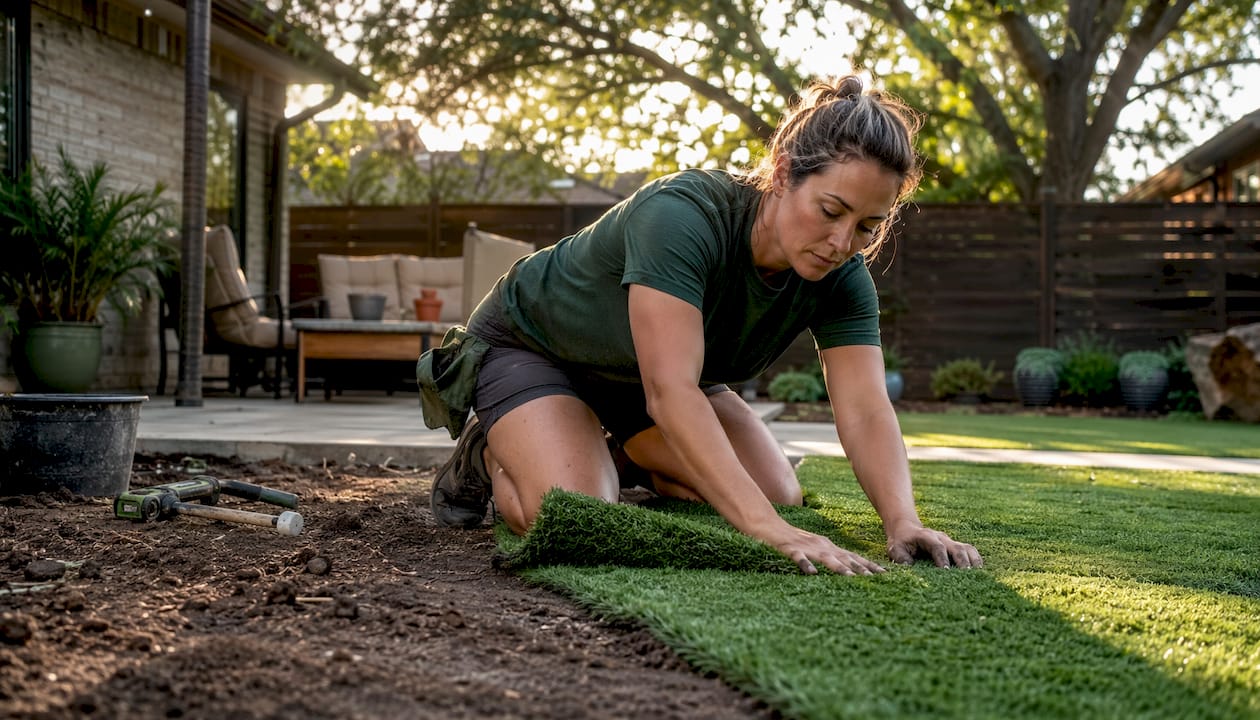
Pave-n-turf installs turf systems designed specifically for DFW conditions, including pet turf, playscapes, and landscape turf that hold up through Texas summers and wet springs. Landscape pavers and decorative rock work alongside turf to create fully dry, low-maintenance outdoor spaces.
Benefits of artificial turf and hardscaping for muddy yards:
- No mud, even after heavy rain
- Durable through high foot traffic and pet activity
- No irrigation needed, reducing water volume on already-saturated soil
- Year-round usability without seasonal replanting
- Eco-friendly and drought-resistant
Artificial turf paired with a properly prepared base gives Dallas homeowners a surface that drains, stays clean, and looks great without the seasonal mud cycle that natural grass creates in clay soil.
What does fixing a muddy yard actually cost?
Costs vary widely depending on the solution. Simple fixes are genuinely affordable. A downspout extension runs $15–$30. Spreading straw or wood chips for a temporary cover costs $20–$50 per yard. Manual core aeration tools run $40–$100 for a DIY approach.
Structural work costs more. Professional drainage solutions, including French drains and regrading, typically start around $2,000 and go up based on yard size and complexity. Artificial turf installation and paver projects vary by square footage and material choice. Getting at least two quotes from licensed DFW contractors gives you a realistic range for your specific yard.
Recommended local providers for landscaping and drainage in DFW
For homeowners who want professional help, licensed and insured providers with DFW-specific experience are the safest choice. Texas Oasis Landscape & Drainage has specialized in integrated drainage planning since 1980. Complete Landsculpture brings full-service design and build capability with industry association memberships including the Texas Nursery & Landscape Association. MDM Landscapes covers both Fort Worth and Dallas with hardscape and irrigation services backed by a BBB seal. Pave-n-turf focuses on artificial turf and paver installations with strong local ratings across DFW.
For drainage-specific work, DFW Landscaping & Lawn Care holds a Licensed Irrigator credential, which matters when irrigation is contributing to your mud problem.
How to prevent backyard mud from coming back
Fixing the mud is step one. Keeping it gone takes a little ongoing attention.
- Topdress with compost each fall to maintain soil structure in amended areas
- Check downspout extensions after major storms to confirm they are still directing water away
- Adjust irrigation schedules seasonally. Clay absorbs slowly, so shorter, spaced-out cycles prevent oversaturation
- Inspect French drain outlets annually to clear debris and confirm flow
- Avoid tilling wet clay. Wait at least 3–5 days after heavy rain before any soil work
- Reapply mulch in ground cover areas each spring to maintain moisture absorption
Fall is the best time for soil amendment work in DFW. Soil moisture rises after summer, temperatures drop, and you have several months before spring planting for amendments to integrate fully.
Pave-n-turf turns your muddy yard into a clean, usable space
If you are done replanting grass that turns to mud every spring, Pave-n-turf offers a permanent alternative. Rather than managing a drainage problem season after season, you get a surface that simply does not create mud: artificial turf installed over a properly prepared base, or landscape pavers that stay dry and clean regardless of what the Texas sky throws at your yard.

Pave-n-turf serves homeowners across Dallas-Fort Worth with turf systems for lawns, pet areas, playscapes, and putting greens, plus paver and decorative rock installations for patios and pathways. Every project is handled by a local team that knows DFW clay soil and builds for the Texas climate. If you want a free project quote, reach out to Pave-n-turf directly and get a clear picture of what your yard could look like without the mud.
Key Takeaways
The most effective muddy backyard fix in Dallas-Fort Worth combines French drain installation, expanded shale soil amendment, and a durable surface solution like artificial turf or pavers.
| Point | Details |
|---|---|
| Drainage comes first | French drains must discharge to a positive outlet, not rely on clay percolation alone. |
| Skip the sand | Expanded shale, not sand, is the right amendment for DFW clay soil. |
| Sequence your fixes | Address water sources and grading before touching soil or surface materials. |
| Costs range widely | DIY fixes start at low costs; professional drainage solutions typically require significantly higher investment, often in the thousands of dollars. |
| Pave-n-turf eliminates mud | Artificial turf and pavers from Pave-n-turf create permanently dry, low-maintenance surfaces for DFW yards. |
FAQ
What is the cheapest way to fix a muddy yard?
Redirecting a downspout with an extension ($15–$30) or spreading straw and wood chips ($20–$50 per yard) are the lowest-cost starting points. For a longer-term fix without major expense, core aeration combined with compost topdressing improves clay soil drainage over two to three seasons.
How do you get rid of mud in your backyard?
Start by identifying where water originates, whether from downspouts, irrigation, or natural low spots, then address grading and drainage before amending the soil. For high-traffic zones that stay muddy regardless of drainage work, artificial turf or pavers provide a permanent, mud-free surface.
How do you fix a muddy puddle in the yard?
Fill the low spot with topsoil and compost to raise the grade, then plant grass or a ground cover to stabilize it. If the puddle returns after rain, a small French drain or gravel trench will carry excess water away from that specific area.
What can you put over a muddy yard?
Straw, wood chips, or gravel over landscape fabric work as quick covers. For a durable, long-term solution, artificial turf or landscape pavers eliminate mud entirely and hold up through heavy DFW rain seasons without replanting or replenishing.


