Stop Gravel Dust: 4 Installer Proven Fixes Homeowners Need

The fastest way to end gravel dust is to stop relying on loose gravel altogether. Permeable or solid pavers and artificial turf eliminate nearly all dust because there’s no loose aggregate left to break down. Well-contained decorative rock or compacted angular gravel with solid edging can cut dust significantly, but both need real upkeep. Your soil, drainage, and how you actually use the space decide which route fits, and every option still needs some maintenance once it’s in.
TL;DR:
- Installing permeable interlocking pavers or artificial turf effectively eliminates gravel dust, but both require ongoing maintenance such as vacuuming or brushing.
- Angular, crushed gravel with edging is the most budget-friendly option for low-traffic driveways but tends to migrate and need rework over time.
- Proper site evaluation, especially of drainage, slope, and soil conditions, is essential before selecting a dust control method to prevent failure within a year.
- A detailed bid should specify subbase depth, edging, aggregate type, maintenance plans, and warranty to ensure long-term dust mitigation success.
- Regular maintenance like clearing debris, topping up materials, and inspecting joints prolongs the effectiveness of gravel-free surfaces.
Table of Contents
- What Are the Best Dust Control Options for Gravel Surfaces?
- How Do I Choose the Right Dust Control Solution for My Site?
- What Should Be in Your Gravel-to-Pavers or Turf Installation Bid?
- How Often Should You Maintain Gravel-Free Surfaces?
- What Do Installers See That Homeowners Miss?
- Ready to Replace Dusty Gravel With a Finished Surface?
- Sources
- FAQ
What Are the Best Dust Control Options for Gravel Surfaces?
Every fix for gravel dust falls into one of four camps, and each one solves the problem differently.
Permeable interlocking pavers replace loose stone with fitted units that still let water soak through the ground below. There’s no fine material sitting on top to kick up when the wind blows or a car rolls by. The tradeoff is maintenance: permeable pavers need vacuum sweeping and periodic joint replenishment to keep the joints from clogging and the surface from losing its interlock.
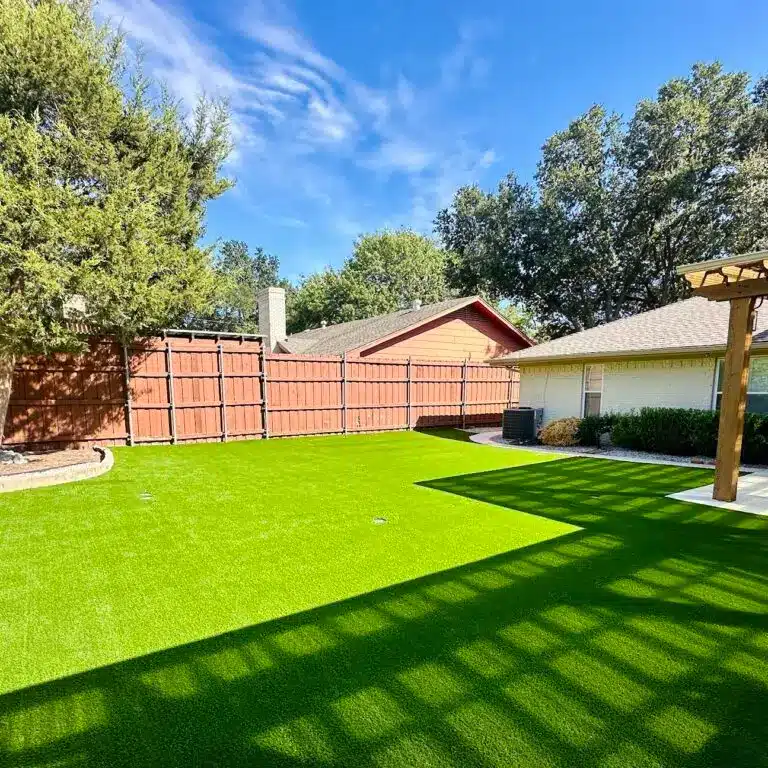
Artificial turf removes the dust problem at the source. Once a compacted subbase goes in and the turf gets secured at the edges, there’s no aggregate left to migrate or grind into powder underfoot.
Contained decorative rock works when you like the look of stone but want it to behave. Choosing the right aggregate, adding a physical border, and sometimes a layer of landscape fabric keeps the rock from mixing into the soil beneath it, though fabric won’t stop seeds or debris landing on top.

Compacted angular gravel with edging is the budget option. Rounded pea gravel never packs down. Angular, crushed material interlocks and compacts, which is why extension guidance consistently recommends angular aggregate over rounded stone for any surface people will actually walk or drive on.
Here’s how each stacks up by use case:
- Walkways and patios: pavers or turf for near zero dust; contained decorative rock if you want a natural look.
- Low-traffic driveways: compacted angular gravel with edging, or pavers for a more finished result.
- Daily vehicle traffic: pavers or a properly engineered aggregate base. Loose gravel of any shape breaks down faster under repeated tire load.
How Do I Choose the Right Dust Control Solution for My Site?
Start with how the space actually gets used, not how you wish it looked in a catalog photo. A patio that holds patio furniture and foot traffic has completely different demands than a driveway your car sits on every day.
- Match the surface to the load. Foot traffic and occasional furniture tolerate almost any of the four options. Daily vehicle weight narrows the field to pavers, compacted angular gravel, or turf over a properly engineered base.
- Check your drainage before you commit. Permeable pavers are not appropriate on steep slopes, in slow draining soils, or where the seasonal water table sits less than two feet below the base of the system.
- Weigh the timeline against the budget. Topping up existing gravel with angular material and edging is the quickest, cheapest move. A designed paver or turf installation costs more upfront but eliminates the recurring dust problem instead of managing it.
- Know when to call in a professional. Slope, soil infiltration rate, and water table depth all require an actual site evaluation. Homeowners routinely assume a surface fix solves everything, but drainage and subgrade condition are usually the real bottleneck.
Pro Tip: If your property has any grade to it, ask a contractor to check infiltration and slope before you settle on pavers. A beautiful permeable installation on the wrong soil will pond, clog, and fail within a season or two.
What Should Be in Your Gravel-to-Pavers or Turf Installation Bid?
A bid that doesn’t spell out the base and edging details is a bid that leaves room for dust to come back within a year. Here’s what to require before you sign anything.
- Subbase depth and compaction. Specify the exact depth and compaction standard, and ask for underdrains or an engineered base if your soil doesn’t infiltrate well.
- Edge restraints. Paver edging, metal or stone borders, or landscape curbing keep aggregate or paver units from creeping outward. Without them, even well-compacted material migrates.
- Aggregate type. Angular, crushed stone compacts and locks together. Rounded pea gravel drains well but never stays put, which makes it a poor choice anywhere people walk or park.
- A written maintenance schedule. For permeable pavers, this means a vacuuming frequency and joint replenishment plan. For turf, it means brushing and infill top-offs.
- Site protection and cleanup terms. Confirm the contractor protects finished areas during the rest of the project and states a warranty period in writing.
- Professional sign-off on drainage work. Any job touching stormwater infiltration or permeable systems should involve someone trained in that specific design, not a general laborer eyeballing it.
| Bid item | Why it matters |
|---|---|
| Subbase depth/compaction | Prevents settling and rutting that reintroduces dust |
| Edge restraints | Stops aggregate or pavers from migrating outward |
| Aggregate specification | Angular material locks in place; rounded gravel shifts |
| Written maintenance schedule | Keeps joints and surfaces from clogging over time |
| Warranty and cleanup terms | Protects your investment after installation |
How Often Should You Maintain Gravel-Free Surfaces?
Even a perfectly installed surface collects dust and debris over time. The maintenance habits that keep it that way differ by material.
- Permeable pavers: vacuum sweep on a regular schedule, replenish joint material as it wears down, and inspect after major storms since clogged joints are a common cause of failure.
- Decorative rock and compacted gravel: rake out leaf litter, remove organic debris before it decomposes into fines, and top up stone where it has thinned or migrated. Maintaining uniform depth and controlling weeds keeps loose material from reappearing.
- Artificial turf: brush the fibers to keep them upright, clear debris regularly, check edges for lifting, and have seams and infill levels checked periodically.
- Seasonal notes: skip sand or salt on permeable surfaces in winter, since both clog pore spaces. Protect any finished surface with plywood or plating if heavy equipment needs to cross it later.
Pro Tip: Leaf litter and tracked soil are the sneakiest source of “new” dust. Even a flawless installation will start shedding fines again if organic debris is left to break down on top of it.
What Do Installers See That Homeowners Miss?
Installers commonly see failures that rarely start with the material itself, such as artificial turf, pavers, and decorative rock installations across residential and commercial properties in the Dallas-Fort Worth area. They start with what lands on top of it.

Leaf litter, wind-blown soil, and tracked-in dirt settle onto even a well-built gravel or paver surface and slowly rebuild the exact fines problem the installation was meant to solve. Rock that migrates past a weak or missing border mixes with the soil underneath and creates the same dust cycle homeowners were trying to escape in the first place. The fix isn’t a better rock. It’s a physical edge that actually holds, paired with a maintenance habit that gets followed instead of forgotten.
That’s the real gap between a gravel topping that fails again in a year and a finished surface that doesn’t. Pave-N-Turf’s landscape pavers and turf installations are built around edging and base work that address that gap from day one, not as an afterthought.
— Everson
Ready to Replace Dusty Gravel With a Finished Surface?
If you’re comparing loose gravel against pavers, turf, or contained decorative rock, the honest answer is that DIY topping only buys you a season or two before dust creeps back. Pave-N-Turf builds the surface once, with the subbase, edging, and drainage work done right the first time, so you’re not re-graveling every spring.

Our Dallas-Fort Worth and Austin teams install landscape turf, landscape pavers, and decorative rock for homeowners, pet owners, and property managers who are done fighting dust and mud. If pets or kids use the yard, our pet turf and playscapes options are built for exactly that kind of daily wear.
Request an on-site assessment and we’ll walk your property, check drainage and slope, and hand you a written maintenance plan alongside your quote, so you know exactly what you’re getting before any work starts.
Sources
- Gravel pathways in the garden (UC ANR, 2020)
- Permeable hardscapes and permeable paving (University/VT/UMD materials)
- Mulches for the landscape (Mississippi State Extension)
- Porous pavement fact sheet (Oregon State Extension)
FAQ
Does Artificial Turf Really Eliminate Gravel Dust?
Yes. Once turf is installed over a compacted subbase with secured edges, there’s no loose aggregate left to break down into dust. Pave-N-Turf’s landscape turf installations are built specifically to remove that loose material problem for good.
Is Pea Gravel Bad for Dust Control?
Rounded pea gravel drains well but never compacts, so it shifts underfoot and breaks down faster than angular gravel. UC ANR guidance recommends angular, crushed aggregate for any surface that gets regular foot or vehicle traffic.
Can I Just Add Edging to My Existing Gravel to Stop Dust?
Edging helps a lot by stopping migration, but it works best paired with the right aggregate and occasional maintenance. Without angular stone and periodic raking, contained gravel can still gradually shed fine material.
When Should I Hire a Professional Instead of a DIY Fix?
Any project involving slope, poor soil infiltration, or a high water table needs a professional site evaluation before you install permeable pavers. Virginia Cooperative Extension recommends trained professionals for permeable system design specifically because drainage mistakes are expensive to fix after the fact.
How Much Does It Cost to Replace Gravel With Pavers or Turf?
Pricing depends on the size of the area, site prep needed, and material choice, so Pave-N-Turf provides quotes after an on-site assessment rather than a flat rate. Current details on services like landscape pavers and turf are available directly on the Pave-N-Turf site.