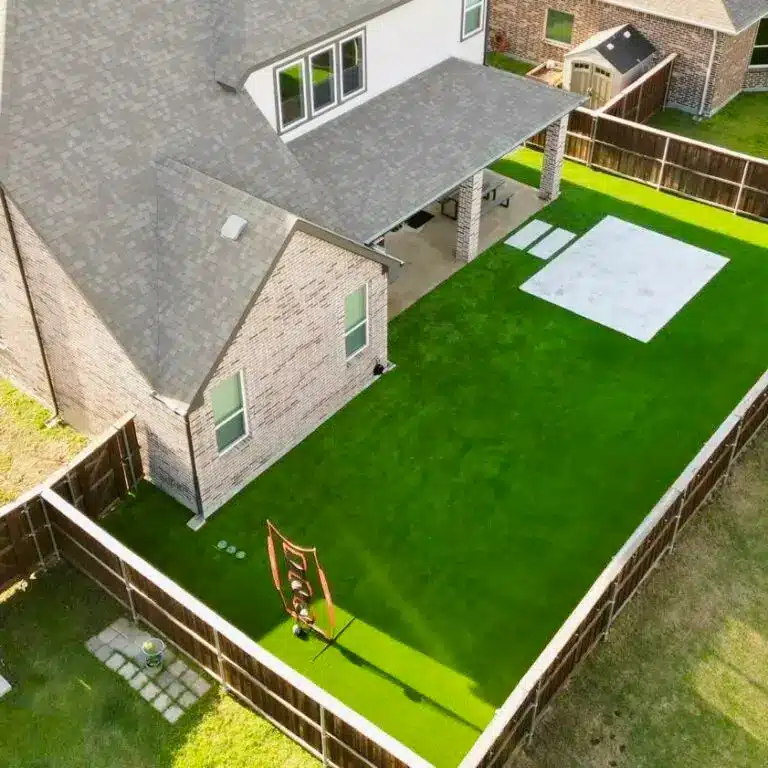
Rock for Dog Run: Best Options for Pet-Safe Yards

Washed pea gravel, sized 3/8" to 1/2", is the best rock for a dog run. It’s rounded, drains fast, stays relatively cool in partial shade, and your dog’s paws won’t come away scraped or bleeding. If you want something even lower-maintenance, especially for a high-traffic multi-dog setup, artificial pet turf is worth a serious look.
Before you order a truckload of gravel, here’s what to keep in mind:
- Best choice: Washed pea gravel, 3/8"–1/2", installed 3–4 inches deep over a compacted crushed stone base
- Main risks: Angular or crushed rock cuts paw pads; small loose pebbles are an ingestion hazard for pica-prone dogs or puppies; dark rock bakes in full sun
- Good alternative: Pet turf for heavy-use runs, senior dogs with joint issues, or owners who prefer minimal daily upkeep
Table of Contents
- Which rocks work best in a dog run?
- What are the real safety risks for your dog?
- How to install a rock dog run the right way
- Keeping your dog run clean and odor-free
- How much rock do you need, and what will it cost?
- When does pet turf outperform rock?
- Key Takeaways
- What our installers actually see on the job
- Pave-n-turf installs dog runs that actually hold up in DFW heat
- Useful sources
- FAQ
Which rocks work best in a dog run?
Not all gravel is created equal, and the wrong choice can mean scraped paws, persistent odor, or a surface your dog refuses to use. Here’s how the most common options stack up.
Pea gravel (3/8"–1/2") is the gold standard. The smooth, water-washed edges are gentle on bare pads, it drains freely, and it’s easy to hose down. Light-colored varieties stay noticeably cooler than darker stone. The main downsides: small dogs or puppies may mouth the pebbles, and it will migrate out of the run without solid edging.
River rock (1"–2") is rounded and paw-friendly, but the larger size makes it awkward to run on. Most dogs find it uncomfortable underfoot for anything more than a slow walk. River rock works better as a border material than as the main run surface, though it does reduce the swallowing risk compared to smaller pebbles.
Crushed stone is angular by nature. Even a brief rub against your own skin will tell you whether a material is safe for paws: if it scratches you, it will scratch your dog. Crushed stone is fine for the compacted base layer beneath the surface gravel, but keep it away from the top where your dog actually walks.

Decomposed granite (DG) compacts well and looks natural, but it breaks down into fine dust that tracks indoors, holds urine odor stubbornly, and can irritate paw pads over time. It’s a popular landscaping choice in DFW yards, but it’s not the right call for a dog run.
Lava rock is a hard no for dog runs. It’s abrasive, reaches very high surface temperatures in direct sun, and the jagged texture is a paw-injury waiting to happen.
| Feature | Pea gravel | River rock | Crushed stone | Decomposed granite | Lava rock |
|---|---|---|---|---|---|
| Paw comfort | Excellent (rounded) | Good (rounded, but bulky) | Poor (angular) | Fair (fine, but compacts) | Poor (abrasive) |
| Drainage | Excellent | Good | Excellent | Fair (compacts) | Good |
| Maintenance difficulty | Low | Low | Low | Medium (tracks indoors) | Medium |
| Choking/swallowing risk | Moderate (small size) | Low (too large) | Low | Low | Low |
| Heat retention | Low–moderate | Moderate | Moderate | Moderate | High |
| Typical cost (DIY) | ~$2–$3/sq ft | Higher | Lower (base use) | ~$1–$2/sq ft | Varies |
| Displacement/migration | Moderate without edging | Low | Low | Low | Low |
- Rounded, washed materials are always safer for paw pads than angular or crushed alternatives
- Avoid coated or dyed gravels — chemical coatings can irritate skin or cause toxicity if licked
- DG and lava rock are better suited to decorative borders than active dog areas
What are the real safety risks for your dog?
Let’s be real: most owners focus on aesthetics and cost, and safety becomes an afterthought. That’s backwards when your dog is spending hours a day on the surface.
Paw injuries
Walking or running on rough, angular gravel can cause abrasions, cuts, and even puncture wounds on paw pads. After every session in the run, check your dog’s paws for limping, redness, swelling, or anything lodged between the toes. Catching a small cut early prevents infection. For dogs that spend long stretches on rougher surfaces, protective booties are a practical option.
Shape matters more than size. Industry guidance is straightforward: if a material scratches your skin when rubbed firmly, it will likely injure paw pads. Rounded, water-washed gravel is far gentler than angular crushed stone or lava rock, regardless of particle size.
Ingestion and choking
Pea gravel’s small size is its one real weakness. Puppies and dogs with pica (a compulsion to eat non-food items) will mouth and swallow pebbles, which can cause intestinal blockages. If your dog is a known chewer or swallower, supervise closely or consider switching to a surface with no loose material. River rock at 1"–2" is too large to swallow easily, which is one reason some owners use it in runs with known pica dogs, despite the comfort tradeoff.
Heat and climate
Dark-colored rock absorbs heat aggressively. In DFW summers, surface temperatures on dark gravel can climb well beyond what’s safe for paw pads. Light-colored, washed pea gravel stays cooler, and hosing it down can drop surface temperature by 15–25°F within minutes. When temperatures exceed 85°F, provide shade over the run. A simple shade sail costs very little and protects both the surface and your dog.

Pro Tip: Do the five-second test: press the back of your hand to the gravel surface for five seconds. If you can’t hold it there comfortably, it’s too hot for your dog’s paws.
How to install a rock dog run the right way
Skipping the base layer is the single most common reason dog runs fail. Without it, gravel settles unevenly, water pools, and odor builds fast. Here’s the contractor-grade process.
- Mark and excavate. Outline the run with stakes and string. Dig down 6–8 inches to allow for both base and surface layers.
- Grade for drainage. Slope the base soil 1–2% away from the house or toward a drainage point. Flat runs pool urine and rainwater.
- Compact the sub-base. Add 3–4 inches of #57 crushed angular stone and compact it firmly. This layer provides structural stability and the primary drainage path. Skipping this step is the most common installation failure and the main cause of long-term odor problems.
- Lay permeable landscape fabric. Place it over the compacted base to suppress weeds while allowing water to pass through. Never use solid plastic sheeting — it traps moisture and accelerates odor.
- Add the surface layer. Pour 3–4 inches of washed pea gravel on top. Depth by breed: small breeds need about 3 inches over a 2-inch base; medium dogs, 3–4 inches over a 2–3 inch base; large or very active dogs, 4 inches over a 3-inch base.
- Install solid edging. Metal or composite edging at least 4–6 inches tall keeps gravel from migrating into the lawn. Weak plastic edging is a false economy — it flexes, buckles, and lets gravel escape within a season.
- Address clay soils separately. If your yard has heavy clay or sits in a high-rainfall zone, add a perforated drain pipe along the low edge of the run before laying the base. Connect it to a dry well or daylight outlet. For DFW-specific backyard drainage solutions, a professional assessment is worth the time.
Pro Tip: For diggers, bury a layer of hardware cloth (1/2" mesh) flat on the graded soil before adding the base layer. It won’t stop a determined dog forever, but it slows them down significantly and protects the base.
Keeping your dog run clean and odor-free
A well-built run still needs consistent upkeep. The good news: the rhythm is simple once you build the habit.
Daily: Scoop and remove solid waste. Every day. Leaving it even one extra day lets bacteria work into the gravel and makes odor exponentially harder to manage.

Weekly: Hose down the entire run with good water pressure. A 10-minute hose-down of a 10×10 ft run is the minimum effective duration to flush urine through the base. Focus on corners and edges where waste concentrates.
Monthly: Apply an enzymatic cleaner across the surface. Enzymes break down uric acid crystals that plain water leaves behind. Let the product sit for 10–20 minutes before flushing. Standard enzymatic pet cleaners available at any pet supply store work well.
Seasonally: Rake the gravel to redistribute it and check for low spots where water pools. Top up thin areas with fresh washed pea gravel as needed.
Every 1–3 years: Replace the top 2 inches of gravel when organic material has saturated the surface layer. High-activity dogs or multi-dog households will hit this threshold faster. When raking no longer freshens the surface, it’s time for a top-up.
A few extra odor-control tactics worth knowing: a light baking soda top-dressing between enzymatic treatments neutralizes surface odor without harming your dog. Rotating which section of the run your dog uses most gives heavily trafficked zones time to recover. And proper drainage beneath the surface does more for odor control than any cleaner — which is why the base layer matters so much.
Pro Tip: Pea gravel is easier to maintain than decomposed granite because it doesn’t compact. DG forms a crust that traps odor and resists flushing; pea gravel lets water pass through freely with each hose-down.
How much rock do you need, and what will it cost?
Coverage formula
Multiply the run’s square footage by the desired depth in feet, then divide by 27 to get cubic yards.
Example 1: 6×20 ft run (120 sq ft) at 3" depth
120 × 0.25 ft ÷ 27 = 1.1 cubic yards
Example 2: 10×20 ft run (200 sq ft) at 4" depth
200 × 0.33 ft ÷ 27 = 2.4 cubic yards
Most suppliers also quote by the ton. One cubic yard of pea gravel weighs roughly 1.3–1.4 tons, so multiply cubic yards by 1.35 for a close estimate.
| Run size | Depth | Cubic yards needed | Approx. tons |
|---|---|---|---|
| 6×20 ft (120 sq ft) | 3" | 1.1 | 1.5 |
| 6×20 ft (120 sq ft) | 4" | 1.5 | 2.0 |
| 10×20 ft (200 sq ft) | 3" | 1.8 | 2.4 |
| 10×20 ft (200 sq ft) | 4" | 2.4 | 3.2 |
Cost factors
Pea gravel runs roughly $2–$3 per square foot installed, making it one of the most budget-friendly dog run surfaces available. Concrete comes in at $6–$10/sq ft and artificial turf at $8–$12/sq ft, though both carry lower long-term maintenance costs.
- Delivery fees add up quickly for small orders — check whether a supplier offers bulk discounts at 2+ cubic yards
- Compaction equipment rental adds cost for DIY installs; factor it in or hire it out
- Edging and fabric are small line items that pay for themselves in reduced gravel loss
- Underdrain piping adds cost upfront but eliminates the odor problems that come with poor drainage
Always ask your supplier for washed pea gravel, confirm the stone is 3/8"–1/2", and verify it’s free of fines or coatings before delivery.
When does pet turf outperform rock?
Rock is a great dog run surface for most situations, but there are real scenarios where pet turf is the smarter call.
| Factor | Pea gravel | Pet turf |
|---|---|---|
| Upfront cost | Lower (~$2–$3/sq ft) | Higher (~$8–$12/sq ft) |
| Daily maintenance | Scoop + weekly hose | Scoop + rinse |
| Odor control | Good with drainage | Excellent with antimicrobial backing |
| Ingestion risk | Moderate (small pebbles) | Very low |
| Heat retention | Low–moderate (light gravel) | Moderate (cool-down needed in full sun) |
| Longevity | 5–10 years with top-ups | 10–15 years typical |
| Paw comfort | Good (rounded gravel) | Excellent |
Turf wins when: you have multiple dogs generating heavy urine loads, your dog has pica or is a puppy prone to mouthing surfaces, a senior dog with arthritis needs a stable non-shifting surface, or you simply want to spend less time on daily maintenance.
Rock still wins when: drainage is the top priority, you prefer a completely natural aesthetic, or upfront budget is the deciding factor.
For DFW homeowners, the heat question matters for both surfaces. Light-colored pea gravel handles Texas summers reasonably well in shaded runs. Turf with quality infill and good drainage handles it too, especially when installed by a professional who understands local climate demands.
Key Takeaways
Washed pea gravel (3/8"–1/2") over a compacted #57 crushed stone base is the most practical, paw-safe, and cost-effective rock surface for most dog runs, with pet turf as the preferred alternative for heavy-use or low-maintenance situations.
| Point | Details |
|---|---|
| Best material choice | Washed pea gravel, 3/8"–1/2", is the safest and most practical dog run ground cover for most breeds. |
| Base layer is non-negotiable | A 3–4 inch compacted #57 crushed stone base prevents settling, pooling, and persistent odor. |
| Maintenance rhythm | Daily scooping, weekly hose-down, monthly enzymatic cleaner, and a gravel top-up every 1–3 years. |
| Paw and heat safety | Inspect paws after every run; hose down light-colored gravel in heat; provide shade above 85°F. |
| Pave-n-turf for heavy-use runs | Pave-n-turf installs pet turf and decorative rock in DFW, including hybrid turf-and-gravel solutions for owners who want minimal upkeep. |
What our installers actually see on the job
Most of the dog run problems we encounter at Pave-n-turf aren’t about material choice. They’re about what’s underneath.
The pattern repeats itself: a homeowner picks a decent gravel, skips the compacted base because it seems like extra work, and within one Texas summer the run has low spots, standing water after rain, and an odor that no amount of hosing fixes. The gravel itself is fine. The foundation isn’t.
The other thing we see constantly is weak edging. Plastic landscape edging looks fine at installation and fails within a year. Metal or composite edging holds gravel in place and keeps the run looking clean season after season.
In DFW, the heat factor is real. We steer clients toward light-colored washed pea gravel when they want a natural surface, and we always recommend shade coverage for runs that get direct afternoon sun. For clients with multiple dogs, heavy traffic, or a dog that mouths everything, we recommend pet turf outright. The upfront cost is higher, but the daily maintenance load drops significantly and the surface holds up for a decade or more without top-ups.
If you’re on the fence between a DIY gravel run and a professionally installed surface, the honest answer is this: a DIY pea gravel run done right is a solid choice. Done wrong, it becomes an expensive, smelly problem to fix. The base and drainage are the parts most homeowners underestimate.
Pave-n-turf installs dog runs that actually hold up in DFW heat
Rock and turf both work. What separates a dog run that stays clean and comfortable from one that turns into a muddy, odorous mess is the installation quality underneath.
Pave-n-turf handles the full scope: pet turf installation, decorative rock for borders and run surfaces, proper grading, drainage, and edging. We also build hybrid setups — a turf rest pad combined with a pea gravel run area — for owners who want the best of both surfaces. Every install comes with a warranty and the benefit of a team that knows exactly how DFW summers punish poorly built outdoor surfaces.

If you’re ready to stop guessing at depths and base layers, reach out to Pave-n-turf for a free site visit and quote. We’ll assess your yard’s drainage, recommend the right surface for your dog’s size and habits, and handle the installation from excavation to edging.
Useful sources
These are the primary references behind the guidance in this article.
| Source | Why it’s relevant |
|---|---|
| Dial A Vet: Can walking on gravel hurt my dog’s feet? | Veterinary guidance on paw injuries from rough surfaces and when to seek care |
| Frontiers in Veterinary Science: Flooring substrates and paw abnormalities | Peer-reviewed study on how flooring type affects paw and limb health in dogs |
| Pea Gravel Dog Run: Depth, Drainage & Odor Control | Detailed installation specs, depth recommendations, and maintenance rhythms |
| HelloGravel: Best Rock for Dog Run | River rock vs pea gravel comparison with size and safety guidance |
| Blooming Expert: Dog Run Design and Drainage | Breed-specific sizing, base layer guidance, and cost comparisons |
| Best Pet Facts: Dog-safe gravel guide | Cautionary list of materials to avoid and why angular rock is harmful |
FAQ
What is the best material to put down in a dog run?
Washed pea gravel, 3/8"–1/2" in size, is the most recommended dog run ground cover. It’s rounded, drains well, and is gentle on paw pads when installed over a compacted crushed stone base.
Is it okay for dogs to run on rocks?
It depends on the rock. Rounded, smooth materials like pea gravel are safe for most dogs. Angular or abrasive surfaces like crushed stone or lava rock can cause cuts, abrasions, and paw pad injuries, so inspect paws after each use.
Is gravel good for a dog run?
Yes, when chosen and installed correctly. Pea gravel with a proper compacted base and solid edging drains well, resists odor buildup, and holds up for years. The key is the base layer — without it, even good gravel will pool water and develop persistent odor.
What do vets recommend for dog run surfaces?
Veterinary guidance consistently points to smooth, rounded surfaces that won’t abrade paw pads. Pea gravel fits that profile; angular crushed stone and lava rock do not. For dogs with pica, arthritis, or joint issues, a non-loose surface like pet turf is often the better recommendation.